A Gift for Our Community: The New I Liq Chuan Training App


Hello Everyone,

We are very grateful to share some wonderful news with our community. To support our collective journey in the Martial Art of Awareness, one of our members, Nikolay Dokholyan, has developed a dedicated I Liq Chuan training app, now available on the App Store.

Nikolay created this app as a personal gift to his fellow practitioners. His goal was to provide a simple, effective tool to help us track our progress, maintain our daily discipline, and stay motivated in our practice.

This resource is now available for all of us to use as a companion on our path. Whether you are a long-time practitioner or just beginning your journey, we hope this tool helps you stay present with your training goals.

How to get started:

We would like to extend our sincere thanks to Nikolay for his time, effort, and dedication in creating this for all of us to enjoy.

Happy training,

Chin Family I Liq Chuan

A member’s Story : Investing in Loss

Investing in Loss

A member’s Story by Lan Tran from Pennsylvania, USA.

Since the age of two, my father exposed me to the world of martial arts. When I turned six, my parents enrolled me in an after-school judo program where I got a junior black belt, and in 1975, when we moved out to Potomac, Maryland, I began Okinawan Shorin-Ryu Karate. That training lasted until 1982 when I left the karate world and began my foray into Chinese martial arts, all while I was teaching American Taekwondo to pay rent.

My world revolved around martial arts, 24/7 as the saying goes: all day, every day. I subscribed to magazines, collected books, and consumed everything I could find that related to learning martial arts. I was obsessed with different martial applications and had enough martial background to extrapolate what I was seeing. Well, all of this did not prepare me for my first encounter with Grandmaster Sam Chin. By this time, all the years of training surely ought to have given me enough skill to prove to people I knew what I was doing.

The Two-Second Collapse: Confronting Grandmaster Sam Chin

That world came crashing down like a house of cards two seconds into touching GM Sam Chin. There was nothing I could do without “getting whacked,” as GM puts it. I tried again, harder and faster, but it was the same result upon contact. My skill went out the window. I found myself standing there thinking of what to do next while GM Sam Chin was asking me, “Show me your skill, where is your skill? Tai Chi, Hsing-I, Baji. . . show me something. What are you going to do?” I couldn’t shake the deer in the headlights look on my face.

Reinterpreting the Philosophy: The True Meaning of “Investing in Loss”

When I had first discovered the internal arts, the saying “Investing in loss” was often thrown around as being the key to the approach of mastery, especially for learning Tai Chi Chuan. The idea appears in a sentence that Professor Cheng Man-Ching wrote, usually attributing the quote to a translation by M. Hennessy:

Moreover, a beginner cannot possibly avoid losing and defeat, so if you fear defeat, you may as well not even begin. If you want to study, begin by investing in loss. An investment in loss eliminates any greed for superficial advanta1ges…

This statement is quite clear. Or so I thought. In retrospect, I see my grasp of it at the time—an example from my own experience of what GM Sam Chin says: that one’s own references and interpretation—one’s own ‘viewpoint’—can really distort the intended meaning. I was young, educated, and accomplished in martial arts, so I thought to myself, how off could my references possibly be? Over the years, my confusion had been compounded by other practitioners who held themselves in authority, who would explain to me their views about what investing in loss means. My training, for example, had been based on looking at what was “weak” if I was losing in Push Hands matches. Over time, this notion of “losing” or learning from this type of externally imposed conditions made me feel like I was just chasing an idea.

So, I just lived with that quote as a philosophical adage. That is, until 2014, when I met GM Sam Chin and started my ZXD_ILC training. Informed by a different framework, the curriculum of Zhong Xin Dao, I could now stand back and observe my own viewpoint, my own perceptions, my own proclivities—and how these got in the way of GM Sam’s approach to “learning how to learn”—namely, that ‘there’s nothing to learn’. I reflected on how, over the years of training various martial arts, a pattern kept happening. It was not necessarily something I was doing intentionally in my training and teaching. It was manifesting on a subconscious level, totally under the radar: my ego was distorting how I informed myself. It made me do things to keep it alive, things like only exposing myself to people who knew less than I did on any subject, thus I would sound smarter, or only demonstrating on people that I could overpower, thereby hiding my lack of skill. And the worst part? Not listening to advice given by people now truly knowledgeable and truly skilled in transmitting internal arts.

A Decade of Dropping: Investing in Loss as a Way of Being

Now, ten years later, as a student 5 / Instructor (application) 2, I experience the process of continually investing in “loss,” in abandoning concepts and “letting go” as a welcome, if frustrating challenge. At least now I have the right references to catch myself, to observe my own thoughts, actions, and behaviors.
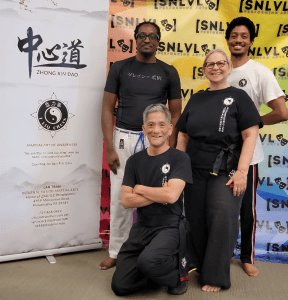
Over the last year, the way I teach ZXD_ILC has gone through an overhaul. I noticed that I communicated to students better by presenting the foundational exercise or “lesson” under consideration not only such that they could recognize the difference, but also in a manner that pointed the way for them to realize the difference. The change of understanding and learning could not come from me, for I can only point them to observe for themselves—as GM Sam says in all his viewpoint talks. Any change in skill must come from how the students change their approach to said exercise. In a way, I had to invest in the “loss” of a teaching identity, too. In the midst my own training, it hit me, for that’s the beauty of our system, where learning and teaching about learning go together. I was leading and asking the student to be willing to “lose” their current viewpoint and invest in adopting a new one to acquire a new way of being. For those who have heard my longer story of how meeting GM Sam Chin totally obliterated my previous perceptions of my martial arts identity and skill, you may appreciate that the past 10 years have continued with that theme of truly investing in loss: dropping, abandoning, letting go. This process describes what I have done with myself over the last decade: I had to invest in the loss of my ego, my set references, even down to losing myself for a new me to flourish. That kind of change is not a comfortable process, as many of us know first-hand. Speaking to many ZXD_ILC disciples and practitioners, it seems we come to acknowledge—and appreciate—what it means to continually be willing to bring ourselves to these moments of change: of facing self, of “letting go” and “investing in loss.” These moments of ‘dropping’, at least in my experience, have been totally life-changing: a way to re-engage with the NOW. “Change with the changes in order not to change” is the embodied practice of a living philosophy.

Celebrating A Quarter-Century of Dedication! 🎉

A profound congratulations to Alex Skalozub and his school as they celebrate a remarkable 25th anniversary of dedication to I Liq Chuan!

This incredible quarter-century is a testament to unwavering dedication, perseverance, and a deep passion for the art of I Liq Chuan. We recognize the immense effort involved in cultivating this practice, especially overcoming unique challenges such as limited access to Grandmaster Sam F.S. Chin and navigating language barriers. Despite these obstacles, Alex has lead his school to embodied the principles of mindfulness in motion and fostering a vibrant and dedicated community. 

We celebrate the countless students and instructors who have contributed to this inspiring legacy. Your commitment has not only preserved but also enriched the practice of I Liq Chuan in Russia.

May the next 25 years be just as fulfilling, bringing continued growth and deeper understanding to all!

Lunar New Year and I Liq Chuan: a look at the Year of the Wood Snake.

Through I Liq Chuan, we perceive the interconnectedness of all things. The Lunar New Year, arriving January 29, 2025, brings the Year of the Wood Snake, a time of change, wisdom, and adapting. The Snake, with its smooth movements and sharp senses, shows “soft” power, like our yielding force. Its intelligence and strategy remind us of the awareness we seek. Wood adds a strong, growing energy, like the creative power of good alignment and relaxation.

This Lunar New Year is a big celebration for many East and Southeast Asian families. It’s a time for family, honoring ancestors, and hoping for a good year. Like our circling movements, the two-week celebration is a cycle. Each day is important. Early days are for family, red envelopes (for good energy), and lion dances (showing energy’s play). Later days might be for temples (finding inner peace), special meals, and the Lantern Festival. The Lantern Festival, with its lights and community, shows what we can achieve with practice: harmony inside and out. Just like our training, Lunar New Year celebrates life’s cycles and growing and changing.

May the Wood Snake year bring you flourishing growth in all aspects of your life – physically, mentally, and spiritually!


Families gather for “Lo Sang”, a traditional Lunar New Year dish for Malaysian Chinese. The higher you mix it, the more prosperous it signifies.  

New Opportunities and Support to the Curriculum!

Dear members,

We are excited to share with you new changes that will elevate your I Liq Chuan journey!

Simplifying the Path

To provide a clearer and more structured learning experience, we’re introducing the following:

  1. Change of names from graded “Instructor Levels” to “Application Levels”
  2. Student Certification Program
  3. Instructor Certification Program
  4. Licensing Program

Chin_Family_Updates_2024_Page_01

Image 1 of 28

NAME CHANGE

Graded Instructor Levels will now be referred to as Application Levels and will be part of our Student Curriculum. This is a much needed change as there has been confusion with the term “Licensed Instructor”. This will give a clear separation between the two.

STUDENT CURRICULUM GRADINGS

We have updated our student pathway to include both Student levels (Entry level to level 11) and Application Levels (Levels 1-6), along with the Five Platforms, which clarify the philosophy essential to our approach. These refinements provide a specific path for students to follow, ensuring that they gain the necessary foundation to progress through our student curriculum.

INSTRUCTOR LICENSING

Instructor Licensing is designed to standardize training and evaluation for students worldwide, and to ensure that I Liq Chuan can be transmitted clearly to future generations. The program covers three core elements:
(1) understanding the philosophy that guides our approach;
(2) knowing how to lead students through each exercise; and
(3) knowing how to prepare students for grading and lead the grading itself. To become a Licensed Instructor, you must meet Student Curriculum grading requirements and successfully complete a series of Instructor Courses organized by HQ.

LICENSING PROGRAM

CHIN FAMILY I LIQ CHUAN PROGRAM UPDATES

Licensing grants the right to use the Chin Family I Liq Chuan trademarks and brand names for marketing and other promotional activities. Our Licensing Program is now divided into two parts: Instructor License & School License. As we continue to spread our art, we expand the possibilities for aspiring full-time instructors and school owners, as well as open the door for other professionals to incorporate our programs into their existing schools.

WEBSITE

In addition, our website is now updated to support instructor and school licensing auto-renewal payments. 

Join Us in Shaping the Future of I Liq Chuan

We’re excited to share these updates, which will unlock new possibilities for your I Liq Chuan journey, whether you’re a dedicated practitioner or an aspiring instructor!


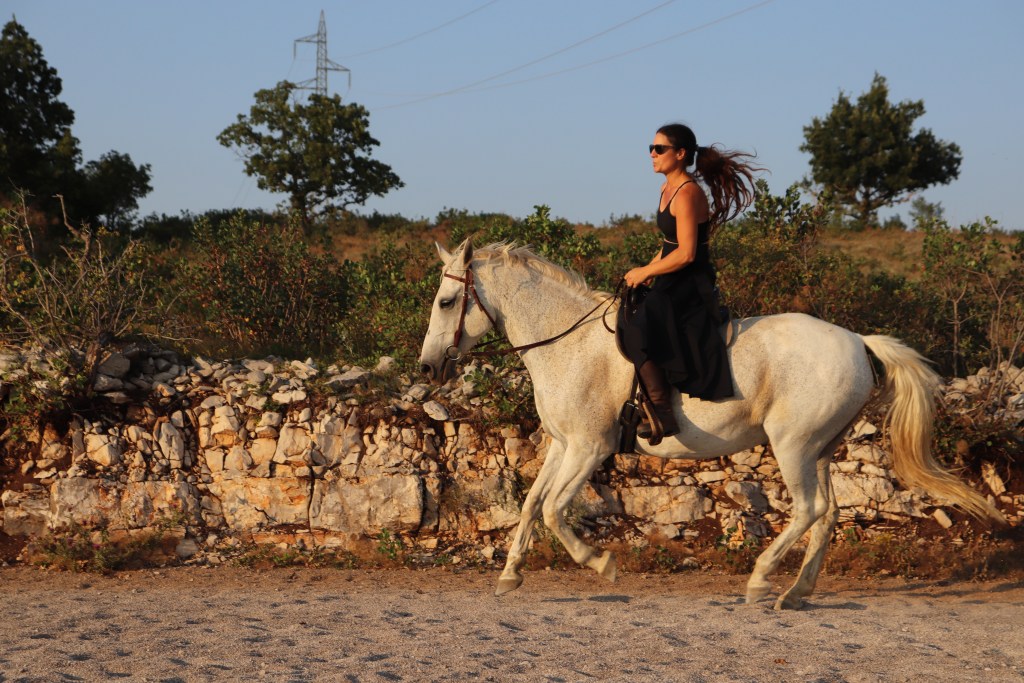
Finding Zen on Horseback: The I Liq Chuan Connection

Finding Zen on Horseback: The I Liq Chuan Connection

A member’s Story by Neja Pastirica from Slovenia.

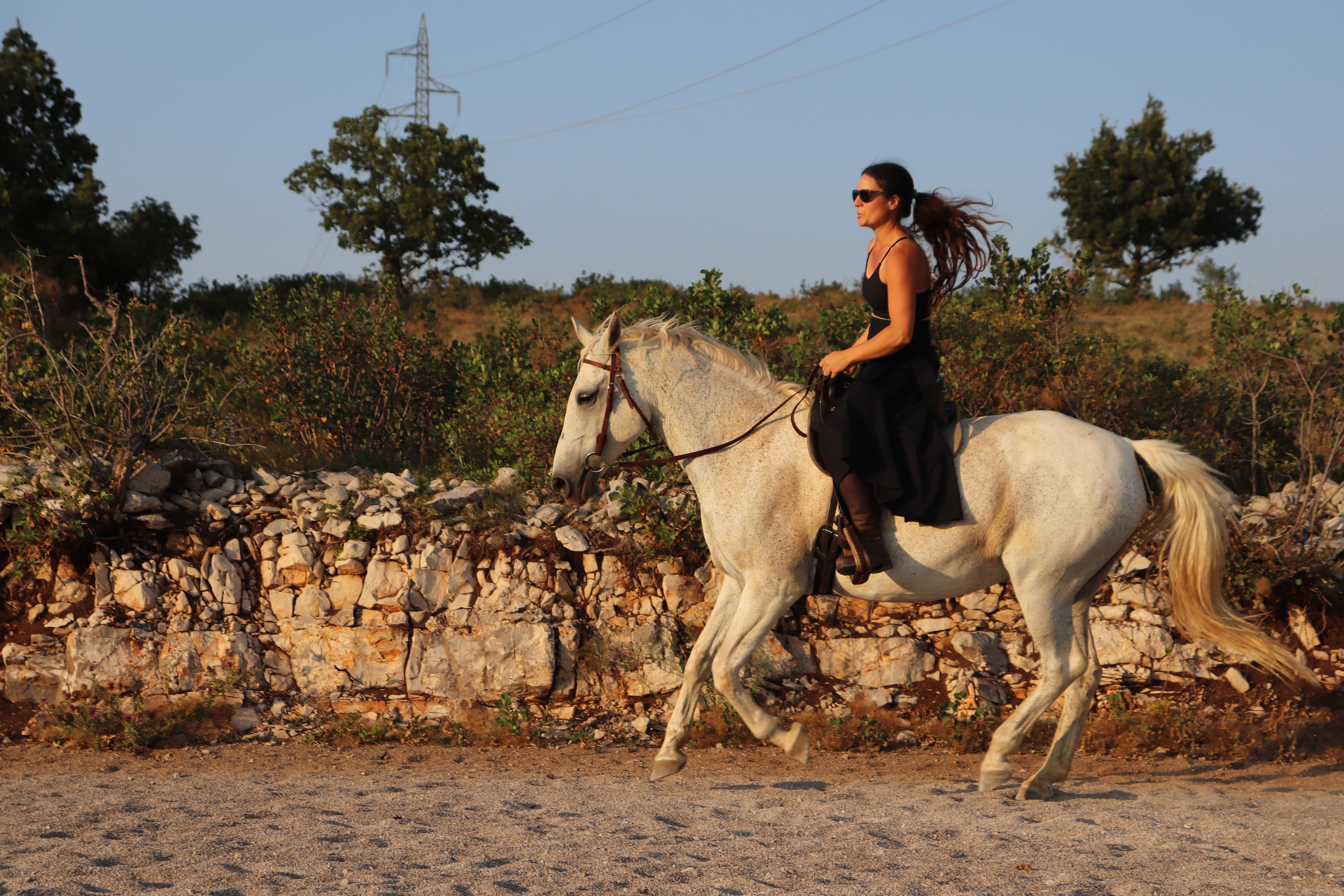
As I stood by the herd of horses, a sense of peace washed over me. It was as if the horse and I were connected on a deeper level. Through I Liq Chuan training, I developed a heightened awareness of my body and surroundings, which translated seamlessly into my interactions with horses. I was able to feel their subtle cues and respond with greater sensitivity, fostering a bond of trust. But as I reached out to stroke the horse’s coat, a sudden realization dawned upon me: What if the key to unlocking the full potential of both I Liq Chuan and horsemanship lay in the synergy between the two?

The first time I heard GM Sam F.S. Chin talk, I was moved. Finally there was somebody talking about nature, and I could feel the truth vibrating in my bones, though I honestly didn’t understand much. Eight years later I still see what a beginner I am in penetrating the depths of I Liq Chuan, but I know that much, that at that first meeting with Sifu, I felt a contact. It is like a vibration, a wisdom attained from direct knowing, that penetrates beyond the rational understanding us humans create through thinking and concepts. It’s a contact I know from horses, and it follows the way of the heart.

When I learned the principles of body mechanics in I Liq Chuan, I was truly amazed at how similar they are to horse riding. It’s about balance through a center-to-center connection, paying attention to constant change, and maintaining flow. You can’t control a 500-kilogram (1000-pound) animal with force; instead, you must merge with its powerful body. So what remains constant on this ever-evolving path that helps me with my work with horses and riding? It’s a here-and-now approach that I Liq Chuan shares.

One of the most important things for me is the philosophy and concept of how to pay attention and develop listening skills. It’s a practice of mindfulness, the essential tool for understanding myself and the horse. For horses, not being mindful is like not being present. It’s as if they don’t truly see you, so why would they want to be with you? I learned that if I want to be present and make direct contact, whether in I Liq Chuan or with the horse, my mental approach should not be to achieve something or make the horse do something, but to cultivate stillness. Then, horses become interested.

With more practice I realized that from stillness comes clarity, but I have to learn to be quiet first, what in general us humans don’t do very well. Not only with our words, but more important – with our minds and bodies. For horses, when we enter their space, our bodies feel like we are in constant chatter, communicating nonsense, so why would they listen to us? Horses’ primal language is body language, so they stop listening because they sense that we are unclear of our direction and what we want. But how to be clear and how to know (what to say), if my initial contact with them in the first place should not have the intention of achieving anything?

I Liq Chuan provided the answer to this question. We must be fully present in the moment, cultivating a deep awareness of our surroundings and our own being. This involves balancing through a harmonious connection with the present. In a herd of horses, leaders must know how to make the right decisions, which means they must be able to align themselves with the natural flow of the environment and respond swiftly to changing circumstances.

For example, when there is danger, horses connect instantly with each other and react swiftly to move together as one. When we aspire to take on the role of the leader, the most important thing for horses to perceive is our ability to provide a sense of security. This means we must maintain a state of balance and not let ourselves be swept away by thoughts and emotions.  We have to be able to consciously respond through stillness and clarity. When the horse recognizes this quality within us, they are able to relax, connect, and form a deep bond with us. This connection is built upon mutual trust and understanding, fostered through a shared experience of presence and harmony.

When riding a horse, relaxation and proper body alignment are essential for developing a harmonious partnership. Riding is not a natural activity for horses, so we must work to achieve balance together. Learning from I Liq Chuan practice, I understand the importance of focusing on myself first, never losing my center, and creating the proper conditions for the ideal outcomes through my own balance. Horses recognize this as our strength, and with the right intention, we can help them develop their strength and balance. To assist a horse in finding balance, I must maintain my own balance and merge with the horse, connecting to its center, legs, and the ground.

With the practice of I Liq Chuan, I learned how to practice on the ground to become more self-aware while riding a horse. I practice relaxation and balance within my body, not using force, but instead focusing on developing suppleness and elasticity. Being mindful of the absorbing and projecting energy in which the horse generates constantly. 

In addition, I noticed that by following the biomechanics of I Liq Chuan and balancing the energies of yin and yang through condensing and expanding, I can support the horse in unifying its body and using its strength to carry itself with greater balance and more momentum. The system that Sifu developed is so profound that it fits perfectly, and I’ve never found a better explanation of how to develop power in such a light and efficient way.

Through the Zhong Xin Dao / I Liq Chuan approach, we learn to cultivate stillness, focus, and self-awareness. These qualities are not only essential for building a harmonious relationship with a horse but can also be applied to all aspects of our lives. Whether we’re dealing with stress, conflict, or simply trying to find inner peace, the principles of Zhong Xin Dao / I Liq Chuan can provide valuable guidance. 

Above all, Sifu teaches us that the primary purpose of learning the “martial” art is not to fight, but to live a fulfilling life and navigate challenges with grace. Through right intention, mindfulness, and practice, we can evolve into better human beings, constantly striving for balance in our relationships with others and the environment. I believe that horses teach us this as well, and that it’s a valuable lesson we must cultivate through our own efforts. Without GM Sam Chin, my path would not be so clear, and I’ve learned from him what it means to be a true teacher and how I can become a responsible caretaker of such a noble and powerful animal as a horse.

I am deeply grateful for the opportunity to have encountered this profound and transformative art! 

Celebrating Gatekeeper’s Birthday

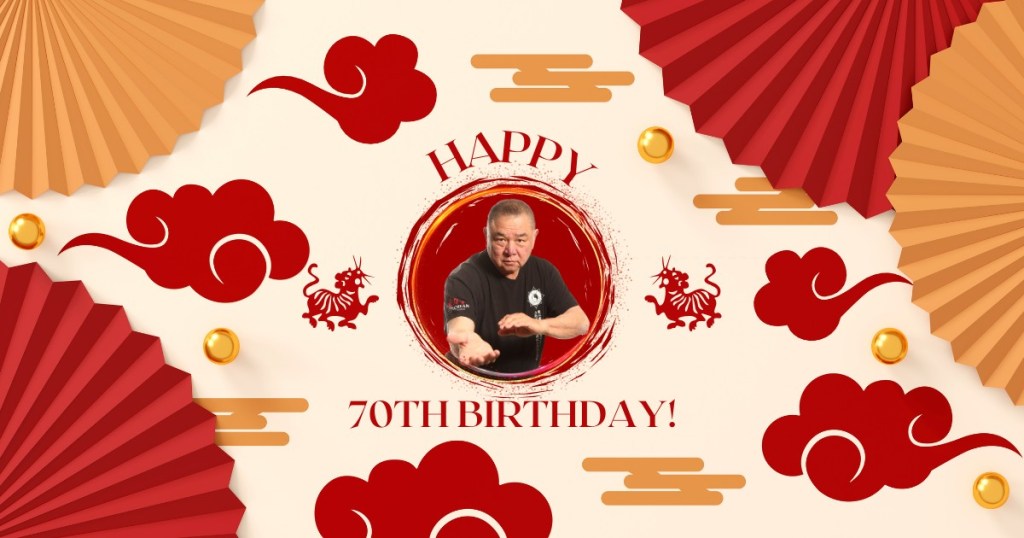
Happy 70th Birthday to our dearest Grandmaster Sam F.S. Chin!


On behalf of the global I Liq Chuan community, we extend our warmest congratulations to Grandmaster Sam F.S. Chin on the occasion of his 70th birthday.

We celebrate his extraordinary journey and express our heartfelt gratitude for his invaluable guidance and teaching.

Your dedication to preserving and evolving the art of I Liq Chuan is an inspiration to us all. Your wisdom, patience, and kindness have shaped countless lives. Your teachings have deepened our understanding of ourselves and the world around us.

We are truly fortunate to have you as our guide. May your journey continue to be filled with health, happiness, and continued enlightenment.

May this special day be filled with joy, peace, and prosperity.
 
Happy 70th Birthday, Grandmaster Chin!
 

A New Generation Begins!

Grandmaster Sam F.S. Chin Historic Workshop in Kazakhstan!

Drawing students from neighboring countries, Grandmaster Sam F.S. Chin first I Liq Chuan workshop in Almaty Kazakhstan this April was a huge success. 

This gathering was a special occasion for many. Some students met the Lineage Holder for the very first time, while others enjoyed long-awaited reunions and updates on the art’s development.

Also big thanks to the organizer Gadilbek Mursaliyev! Beyond the amazing Martial of Awareness workshop, he facilitated an unforgettable cultural experience. The group explored Kazakhstan’s stunning scenery and learned about the rich history and warm hospitality of the local people.

A New Generation Begins!

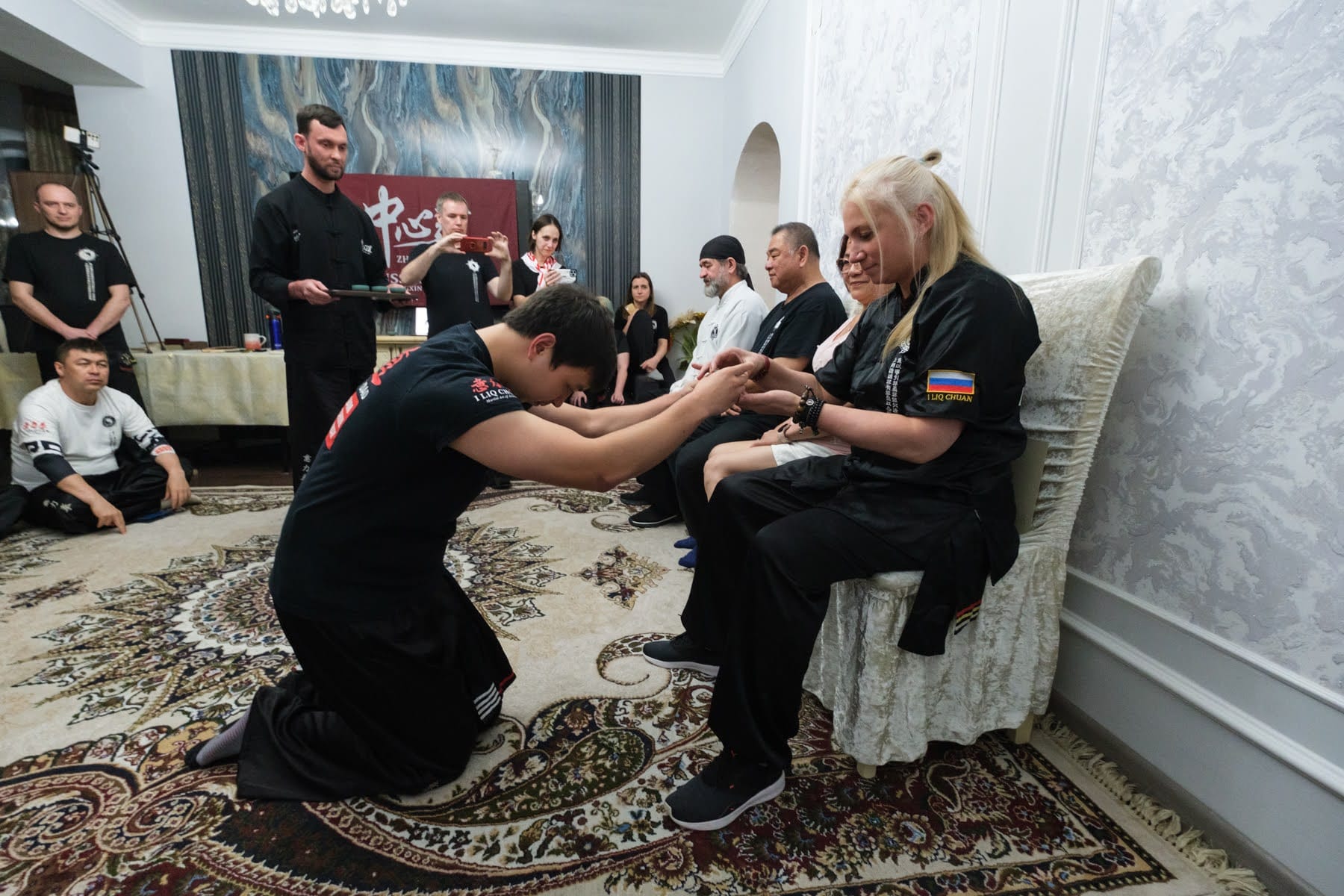
The workshop culminated in a momentous discipleship ceremony. We are thrilled to congratulate Sergey Kham on his acceptance as the first 4th generation disciple of the I Liq Chuan / Zhong Xin Dao system under Master Daria Sergeeva! A touching ceremony was conducted, where Sergey presented tea to his elders, starting with a tribute to the late Founder Chin Lik Keong.

This marks a significant milestone in I Liq Chuan’s lineage, expanding the art’s reach and ensuring its traditions are carried forward for future generations. We can’t wait to see what the future holds for the continued spread of I Liq Chuan and the contributions of new disciples like Sergey!


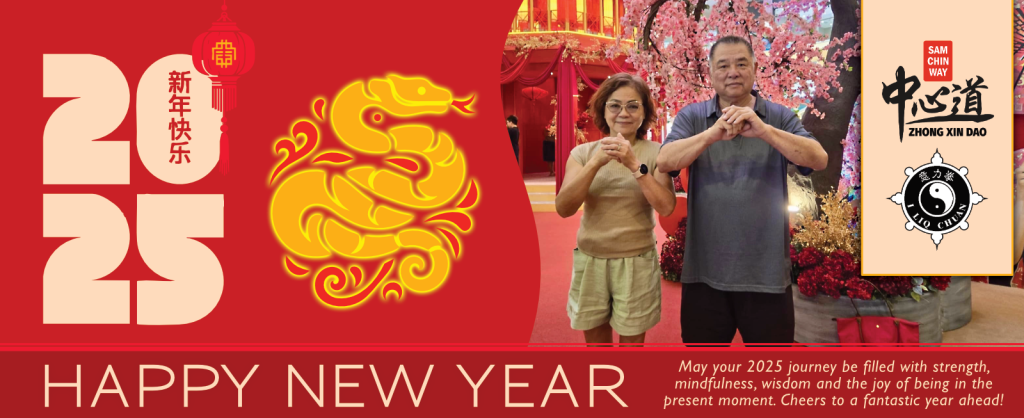
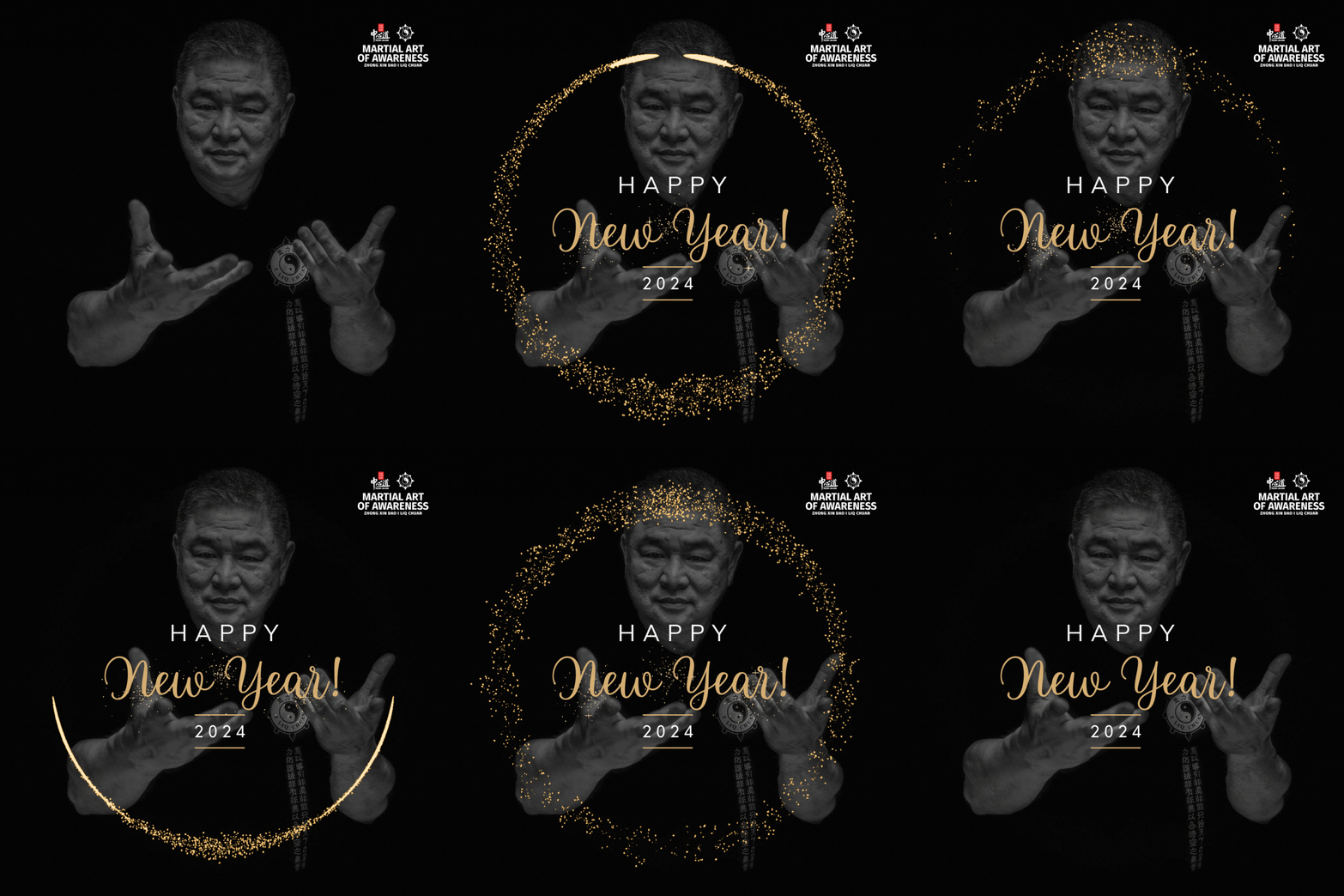
🎉 Happy New Year 2024! 🎉


May your 2024 journey be filled with strength, mindfulness, wisdom and the joy of being in the present moment. Cheers to a fantastic year ahead! 

Farewell to our dear friend – Piotr Nagłowski

On October 28th, 2023, we were saddened to hear the news of the sudden passing of instructor Piotr Nagłowski, who was also one of the first students of I Liq Chuan from Poland. Not only was he a legend in the music industry, he’s an amazing person, a wonderful friend and a great instructor. He’s contributed tremendously in the spread of the art especially through his help in translating the early edition of the System Guide.

Friends and family said goodbye to Piotr Nagłowski at the funeral on Monday November 6th.  He devoted a large part of his life to the art of Zhongxindao Iliqchuan. Students and instructors came to bid farewell to our colleague and friend. We sent our condolences to his family and to those who knew him. Our hearts and prayers are with you.  Goodbye Piotr, we will miss you dearly!

Here’s an article report on his passing and his past contributions to his music profession: